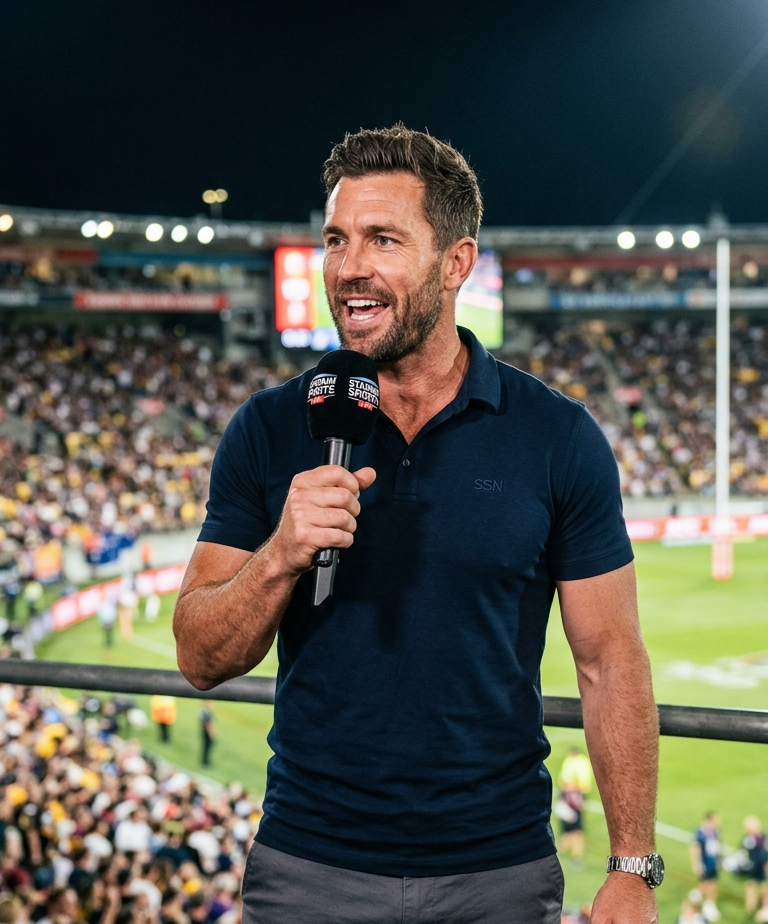
Get ready, sports fanatics, because the athletic world is about to get a serious shake-up! The ‘Enhanced Games’ is dropping, and let me tell you, its premise is straight-up wild: athletes compete with performance-enhancing drugs, no holds barred. This new league, set to kick off in late May, has assembled a seriously ‘dope’ broadcast team featuring former NFL star Emmanuel Acho and sportscaster Abby Labar, aiming to redefine how we perceive athletic achievement. For real, this whole concept challenges decades of traditional sports ethics, where the pursuit of ‘fair play’ has been paramount, often leading to stringent drug testing and athlete bans. This league is ‘no cap’ signaling a paradigm shift, inviting viewers to witness human potential unleashed without conventional restrictions.
The decision to bring Emmanuel Acho and Abby Labar on board as studio anchors is legit ‘on point’. Acho, renowned for his insightful commentary and entrepreneurial ventures like his NFL ‘after show’ ‘Speakeasy’, brings a trusted voice and a deep understanding of sports narratives. Labar, with her experience across MLB Network and the Professional Women’s Hockey League, adds a sharp, contemporary edge to the coverage. Their combined presence ensures that even with the controversial nature of the ‘Enhanced Games’, the broadcast will maintain a professional yet engaging tone, dissecting performances that will undoubtedly push the boundaries of human capability and spark endless water cooler debates across the nation.
Adding another intriguing layer to the broadcast team is Bryan Johnson, the entrepreneur behind the anti-aging initiative, Blueprint. Johnson, a well-known figure in the biohacking community, will serve as an analyst, providing expert commentary on athlete protocols, health, and performance. This move is brilliant, because who better to analyze peak human output enhanced by science than someone actively exploring the frontiers of longevity medicine? His inclusion underscores the league’s commitment to showcasing performance from a unique, scientifically-driven perspective, rather than merely a competitive one. It’s not just about winning; it’s about optimizing the human machine, which ‘hits different’ than any other sports league out there.
Beyond the main anchors, the ‘Enhanced Games’ is building out a comprehensive, entertainment-focused broadcast experience. Oliver Trevena, known for his film roles, will bring a celebrity angle as an entertainment reporter, hosting a ‘blue carpet’ and offering a peek into guest suites. This blend of sports and celebrity culture aims to create an immersive spectacle, blurring lines between traditional athletic events and high-production reality entertainment. Furthermore, seasoned sportscasters like Justin Kutcher will call races and weightlifting, alongside British Olympian Sam Quek and specific analysts like Max Atia and Kurt Mills Hanson, ensuring detailed, expert commentary across all disciplines.
The very existence of the ‘Enhanced Games’ has stirred up a hornet’s nest, drawing sharp criticism from established bodies like the International Olympic Committee, which dismisses it as a way to ‘destroy any concept of fair play.’ Yet, this controversy itself fuels interest, prompting crucial conversations about the ethics of human enhancement, personal autonomy in sports, and the definition of ‘natural’ ability. This league isn’t just about athletic feats; it’s a social experiment pushing the envelope on what society accepts as competitive sport, and for some, it’s a refreshing, albeit provocative, take on the future of athleticism in an era of rapid scientific advancement.
Ultimately, the ‘Enhanced Games’ is poised to be more than just a sports competition; it’s a cultural commentary, challenging long-held beliefs about purity in sport and the limits of human potential. By openly embracing performance enhancements, it invites a new kind of viewer – one curious about the absolute peak of human physical and physiological capability, unburdened by conventional restrictions. This approach could fundamentally alter how athletes train, how records are perceived, and how fans engage with the spectacle of elite performance. It’s a bold, potentially ‘game-changing’ venture that could genuinely shake up the entire sports entertainment landscape.
If you enjoyed this article, share it with your friends or leave us a comment!

Livia Dorne covers film, television, music, and pop culture with a keen editorial perspective. She delivers engaging commentary, reviews, and behind-the-scenes insights that keep readers connected to the entertainment world. Her style blends critique with storytelling.