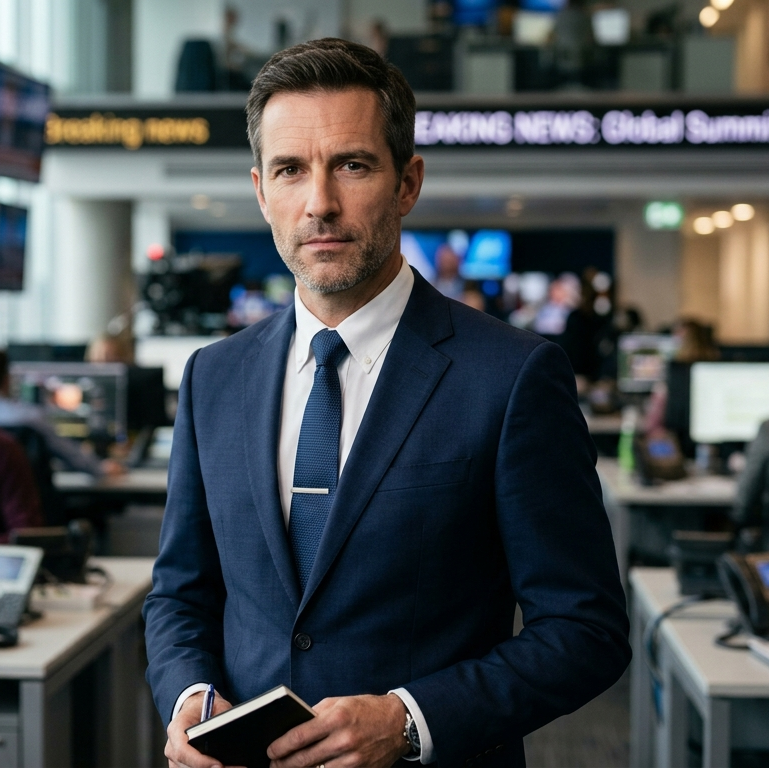
In a media landscape often described as fractured and polarized, CNN’s Donie O’Sullivan has carved out a unique, ‘no cap’ niche: engaging directly with figures across the political spectrum, including those often labeled extreme. As the article states, O’Sullivan, a well-known reporter, travels the country talking to hardcore partisans on all sides, who surprisingly tend to open up to him. His mission is less about changing minds and more about understanding the underlying human motivations, even when confronting contentious topics like extremism. It’s a bold move, and as O’Sullivan points out, ‘they’re human,’ a simple yet profound truth that underpins his entire approach to covering America’s deep divides.
O’Sullivan observes a significant shift in recent years, noting that what was once considered fringe on both the left and right has now moved into prominent mainstream debates. He highlights prominent figures like Tucker Carlson and Marjorie Taylor Greene on the right, and the insurgent left’s primary races, as examples of this trend. However, according to the report, he cautions against drawing false equivalencies, pointing out critical differences, such as the blatant antisemitism he sees from figures like Nick Fuentes compared to the anti-Zionist stance articulated by Hasan Piker. For O’Sullivan, these distinctions are crucial, even if some might argue the effects are similar, showcasing the nuanced reporting needed for these complex issues.
A striking commonality O’Sullivan finds across these diverse groups is a deep sense of disaffection with the government and a belief that ‘the system is not working.’ This sentiment, he notes, is often exacerbated by feelings of isolation and the pervasive influence of social media algorithms. He acknowledges the ease with which individuals can fall into ‘rabbit holes’ of conspiracy theories or outrage, feeling ‘there-but-for-the-grace-of-God’ about the same digital traps. This shared frustration, irrespective of political alignment, serves as a powerful motivator for individuals who feel compelled to take action, sometimes leading to undesirable outcomes like vigilante justice, as seen in tragic events like the alleged actions of Luigi Mangione.
The journalist confronts the ‘platforming’ dilemma head-on, a major point of criticism for those who believe interviewing extremists gives them undue legitimacy. O’Sullivan argues that the mainstream media is no longer the sole gatekeeper of information; figures like Hasan Piker or Tucker Carlson already command millions of listeners. For him, the question isn’t whether to amplify, but whether to participate in the conversation at all. He believes media organizations have a responsibility to engage, fact-check, and provide context, leveraging their resources to shine a light on these spaces, rather than sitting it out and potentially doing a disservice to their audiences by leaving critical narratives unexamined.
Despite what he describes as an ‘overwhelmingly pessimistic’ outlook on the current state of affairs, O’Sullivan sees a ‘lit’ opportunity for journalism to adapt and truly make a difference. He recounts a poignant example of a liberal woman in the Bay Area who, after delving into anti-vaccine sentiments, found herself pulled into a rabbit hole of homophobia, transphobia, racism, and antisemitism. Her eventual realization and exit from this dark space, he believes, proves that change is possible. This perspective suggests that while the journey out of these ideological traps is tough, impactful journalism can light the way, providing clarity in a world often obscured by misinformation.
Undertaking this ‘dope’ but demanding work comes with significant personal risks, including intense online threats and doxxing, a reality O’Sullivan accepts as part of the job for impactful reporting today. His coping mechanisms include disconnecting from the internet and maintaining contact with his subjects, many of whom express appreciation for his fairness, even when they disagree with his reporting. He admits it’s a ‘can’t-win situation’ in terms of pleasing everyone, but if both sides are ‘mad,’ it often means he’s doing something right—focusing on the bigger picture of providing a platform for voices often unheard, rather than seeking universal approval.
O’Sullivan emphasizes that a journalist’s ‘straight up’ job is to give everyone a hearing, moving beyond the echo chambers of New York and D.C. He cites the backlash from both sides after his special on the insurgent left, which featured Hasan Piker and James Carville, as proof. While some attacked him for speaking to Piker, others criticized him for Carville. Yet, as the article notes, Piker himself commended O’Sullivan for his fairness, underscoring the reporter’s commitment to balanced coverage. This commitment to hearing diverse perspectives, even from those with ‘dangerous stuff’ to say, helps society understand the underlying sentiment and potentially lead to reconciliation.
Looking ahead, O’Sullivan notes a critical difference between the political climate now and that of 2018: the left has developed a massive, independent media infrastructure, mirroring the ‘MAGA-verse’ that has been growing for a decade. He points to platforms like ‘Pod Save America’ and Hasan Piker’s presence as key examples of this burgeoning influence. This development, he predicts, will have a huge impact on presidential debates and the broader political landscape in the coming years, indicating that the current level of political discourse is ‘not settling anytime soon.’ His ultimate goal remains helping society run by fostering understanding, not violence, by creating compelling, fact-based conversations.
If you enjoyed this article, share it with your friends or leave us a comment!
Livia Dorne covers film, television, music, and pop culture with a keen editorial perspective. She delivers engaging commentary, reviews, and behind-the-scenes insights that keep readers connected to the entertainment world. Her style blends critique with storytelling.