
The latest push in US-Iran diplomacy is heating up, with Pakistan playing a pivotal role in trying to bridge what seems like an ever-widening chasm between Washington and Tehran. Pakistani Interior Minister Mohsin Naqvi’s recent visit to Iran, his second in a week, clearly signals a serious attempt to keep the channels open, even as tensions remain high. This isn’t just a friendly chat; it’s a critical moment for global stability, and everyone’s watching to see if these talks are ‘for real’ or just another round of political theater.
Understanding the current stalemate requires a deep dive into decades of complex, often volatile, US-Iran relations. From the 1979 revolution and the hostage crisis to the imposition of crippling sanctions and the controversial withdrawal from the Joint Comprehensive Plan of Action (JCPOA), the historical baggage is immense. Each side views the other with deep mistrust, making every diplomatic step a tightrope walk where any misstep could ignite a broader conflict. Mediators like Pakistan are tasked with a monumental challenge: convincing old adversaries to find common ground when fundamental interests clash.
The core issues on the table are no joke. Iran’s enriched uranium stockpile is a major sticking point, with the US demanding its surrender and Tehran proposing handing it to a third party. Then there’s the question of Iran’s right to enrich uranium at all, a right previously recognized under the Obama-era JCPOA that Trump later ditched. The US wants a two-decade moratorium, while Iran sees its nuclear program as a sovereign right, making this a seriously thorny issue that feels almost impossible to resolve without a major concession from either side.
Another explosive element is the Strait of Hormuz. This narrow waterway is, for real, a global economic artery, through which a massive chunk of the world’s oil and LNG passes. Iran’s recent restrictions and proposals for transit tolls have ruffled feathers internationally, escalating fears of supply disruptions. Washington’s naval blockade on Iranian ports adds another layer of pressure, highlighting how economic leverage and strategic chokepoints are being weaponized in this geopolitical chess match. It’s a high-stakes situation where global energy security hangs in the balance.
Adding to the complexity is Iran’s network of regional proxy groups, collectively known as the ‘Axis of Resistance.’ These include groups like the Houthis in Yemen and Hezbollah in Lebanon, who extend Iran’s influence across the Middle East. The US insists Iran must cease all support for these groups, viewing them as destabilizing forces. However, for Tehran, these proxies represent a crucial part of its regional defense strategy and a counterweight to perceived adversaries. Giving them up would mean fundamentally altering its foreign policy, which is a tough sell, no cap.
Beyond the direct US-Iran exchanges, other global players are definitely in the mix. China, for instance, has hosted leaders from both the US and Russia recently, underscoring its significant, albeit sometimes opaque, influence. Beijing’s role as a major energy consumer and economic partner for Iran gives it unique leverage, yet a breakthrough on the Strait of Hormuz or other issues hasn’t materialized from these high-level meetings. The international dimension makes these negotiations even more intricate, as great powers jockey for position and influence.
As discussions continue, the path forward remains anything but clear. The rhetoric from leaders like Donald Trump, hinting at renewed strikes if talks don’t go ‘on point,’ keeps the pressure dialed up. While temporary ceasefires offer glimmers of hope, the fundamental disagreements on nuclear capabilities, regional influence, and economic access are still ‘sketchy’ territory. The persistent diplomatic efforts, spearheaded by countries like Pakistan, represent the world’s desperate hope to avoid another major conflict in an already volatile region. Let’s hope all parties can find a way to get this done.
If you enjoyed this article, share it with your friends or leave us a comment!
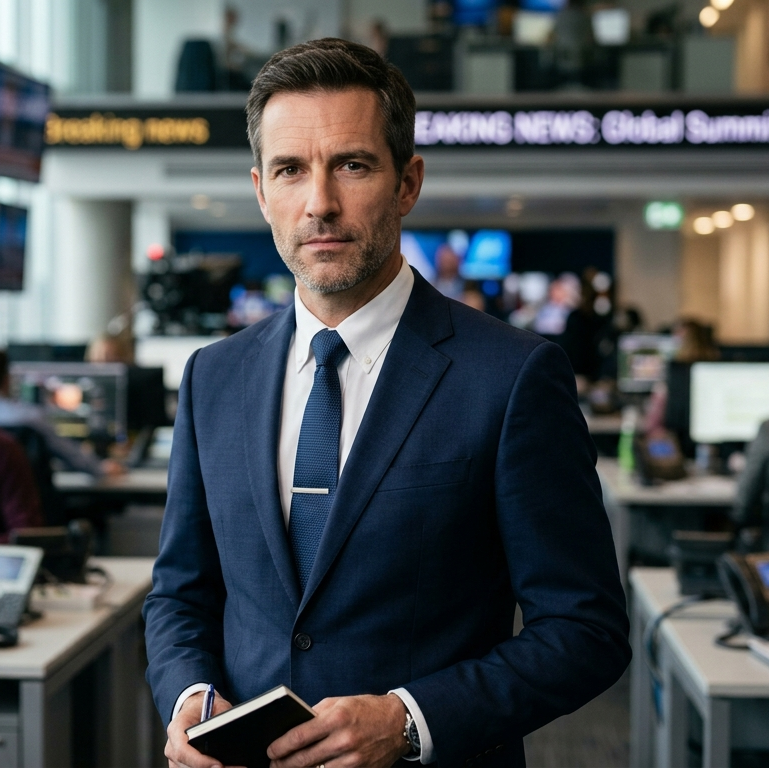
Adrian Velk is a global affairs journalist focused on breaking news, geopolitics, and societal trends. With a sharp eye for detail and a commitment to accuracy, he delivers timely reporting that helps readers understand the fast-moving world around them. His work blends factual depth with clear storytelling, making complex events accessible to a broad audience.